ACTIVATED CASO₄-INDUCED VACUOLATION AS A QUANTITATIVE PLATFORM FOR PHAGOCYTOSIS-DRIVEN DRUG SCREENING

ACTIVATED CASO₄-INDUCED VACUOLATION AS A QUANTITATIVE PLATFORM FOR PHAGOCYTOSIS-DRIVEN DRUG SCREENING
Goswami, V.; Faiz, A.; Dutt, G.; Kumar, A.; Bashir, S.; Gupta, A.; Das, S.; Joshi, A.; Das, S. K.
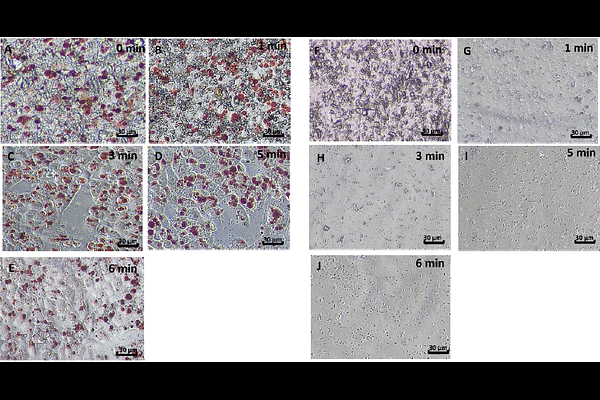
AbstractCytoplasmic vacuolization is a fundamental process associated with phagocytosis, lysosomal acidification, and autophagy, yet robust in-vitro models for its quantification and pharmacological screening remainlimitedor insufficiently established. In this study, we demonstrate that thermally activated calcium sulfate (ACS) induces extensive vacuolation across mammalian cell lines including HeLa, RAW 264.7, 3T3-L1, and SH-SY5Y, thereby establishing a versatile platform to study vacuole biogenesis. To ensure reproducibility, particle heterogeneity was addressed using sedimentation-based fractionation, with homogeneous suspensions obtained at the 5th minute producing stable and consistent vacuole formation. Vacuolation was subsequently quantified by Neutral Red (NR) uptake, dose and time dependent response analyses confirmed direct correlation between ACS concentration and vacuole induction. The assay was validated with bafilomycin A1 (BFA1), a selective V-ATPase inhibitor, which served as a positive control and demonstrated concentration and time dependent inhibition of vacuole formation and acidification. Building on this framework, ten commercially available drugs were screened, revealing distinct profiles ranging from early cytotoxicity, strong vacuole inhibition to partial suppression or negligible effects. This dual capacity to discriminate between vacuole inhibition and cytotoxic responses highlights the utility of ACS-induced vacuolization as a sensitive and scalable in vitro platform. Collectively, our findings position this system as a tractable assay for mechanistic studies of vacuole biology and a functional screening tool for identifying modulators of lysosomal and phagocytic pathways relevant to infection, Lysosomal Disorders, and Phagocytotic dysfunction disorders.