Structure-affinity correlations and separable optical activity in carbon nanotube protein coronas

Structure-affinity correlations and separable optical activity in carbon nanotube protein coronas
Miller, J.; Coscia, A.; Nadeem, A.; Kim, M.
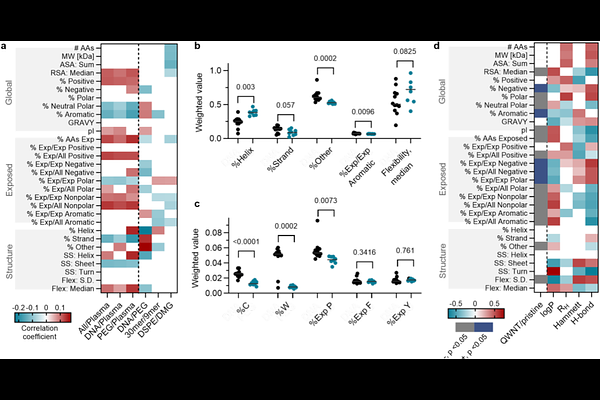
AbstractBiomolecular corona on nanoparticle surfaces enriches low-abundance proteins and compresses the dynamic range of the plasma proteome. Single-walled carbon nanotubes are particularly attractive because their surface chemistry is highly tunable, and their near-infrared fluorescence directly reports corona modulation. However, how surface chemistry shapes the corona and how the corona relates to the fluorescence response remain unclear. We profiled protein enrichment patterns and the resulting fluorescence in a library of 25 chemically modified carbon nanotubes by quantitative proteomics and near-infrared fluorescence spectroscopy. We found that polymer and quantum-defect chemistry orthogonally modulate corona composition and dispersion forces are the dominant, universal driver of protein-nanotube binding. Proteomics and fluorescence correlation analyses indicate that enrichment and fluorescence response are partially decoupled. A subset of corona proteins stays optically silent, but where responses occur, enriched proteins respond at lower, physiologically relevant ranges than depleted ones. Our findings inform design principles for carbon nanomaterial-based sensors and biomarker discovery platforms.