Alternaria atra from distinct ecological roles share functional genomic repertoires

Alternaria atra from distinct ecological roles share functional genomic repertoires
Schmey, T.; Bahar, K.; Tominello-Ramirez, C.; Sepulveda Chavera, G.; Stam, R.
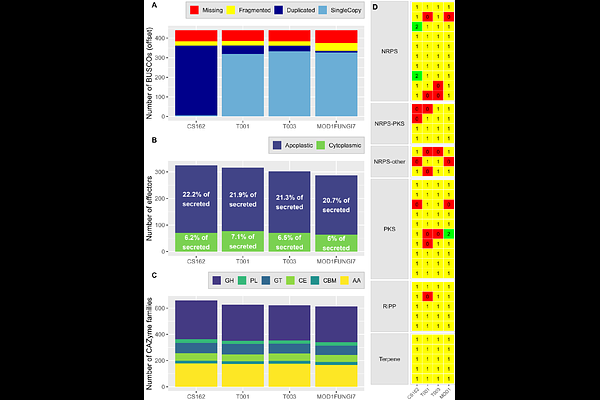
AbstractFungi, particularly ascomycetes, exhibit diverse ecological lifestyles, including endophytism, pathogenicity, and saprotrophy. Species of the genus Alternaria are taxonomically and ecologically diverse, yet the genomic determinants underlying different lifestyles remain poorly understood. Here, we investigate lifestyle-associated genomic variation in Alternaria atra using two newly collected isolates obtained as plant endophytes. We confirm their taxonomic identity and generate draft genome assemblies for both isolates. We assess their phenotypic behaviour under laboratory conditions and examine their genomic features alongside those of a previously published A. atra isolate described as pathogenic. Despite differing isolation histories, the endophytic and pathogenic isolates exhibit similar behaviour under laboratory conditions and possess highly comparable genomic repertoires, including predicted effector proteins, carbohydrate-active enzymes, and biosynthetic gene clusters. We detect no clear genomic signatures distinguishing endophytic and pathogenic origins or lifestyles. These findings suggest that A. atra harbours a shared genomic repertoire compatible with multiple ecological strategies, supporting a model of lifestyle plasticity rather than fixed genomic specialization. Our results add to growing evidence that genome content alone does not reliably predict ecological roles in ascomycete fungi.