Therapy-associated mutagenesis at CTCF binding sites is shaped by chromatin context and DNA repair capacity

Therapy-associated mutagenesis at CTCF binding sites is shaped by chromatin context and DNA repair capacity
Cheng, K. C.; Klein, Z. P.; Mishra, J.; Bahcheli, A. T.; Lok, B. H.; Pugh, T. J.; Reimand, J.
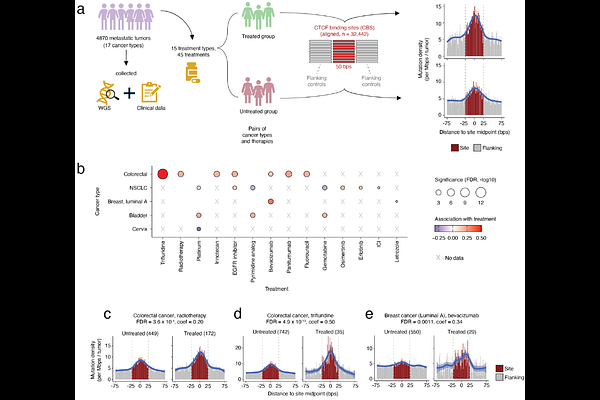
AbstractGenotoxic cancer therapies introduce DNA damage that can be fixed as somatic mutations in surviving tumor cells. However, the impact of therapy-associated mutagenesis on regulatory elements remains unclear. CTCF binding sites (CBS) are chromatin architectural elements that exhibit recurrent localized mutation enrichment in cancer genomes. We asked whether treatment exposure is associated with increased mutagenesis at CBS in 4,870 whole-genome sequences from metastatic tumors across 17 cancer types and 45 therapies. Radiotherapy and trifluridine exposure in metastatic colorectal cancer were associated with increased mutation enrichment at CBS. This enrichment was pronounced at motif-containing sites and in low-expression or late-replicating genomic contexts. Alterations in DNA damage response genes, including BRCA2, were associated with increased CBS mutation enrichment following radiotherapy. Together, these findings indicate that therapy-associated mutagenesis at CTCF binding sites is shaped by chromatin context and DNA repair capacity, extending the mutational consequences of cancer treatment to regulatory genome architecture.