KIF18A Maintains Kinetochore-Microtubule Attachments in CIN Cells by Limiting Microtubule Polymerization

KIF18A Maintains Kinetochore-Microtubule Attachments in CIN Cells by Limiting Microtubule Polymerization
Fonseca, C.; Fisher, K.; Wagner, E.; Paschall, S.-C.; Kim, H.; Stumpff, J.
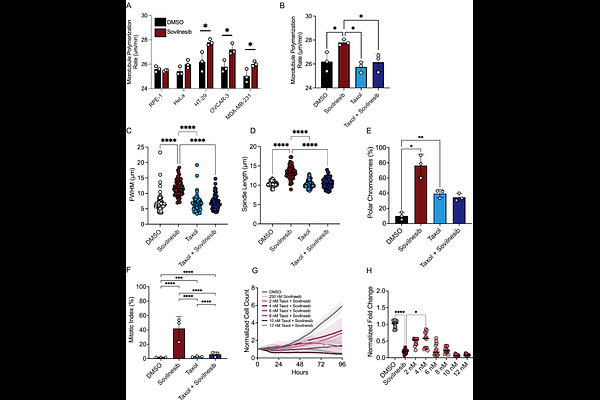
AbstractChromosomal instability (CIN) generates vulnerabilities that can be therapeutically exploited, including sensitivity to inhibition of the kinesin motor KIF18A. However, the mechanistic basis for why a subset of CIN tumor cells depend on KIF18A remains unclear. Here, we compare mitotic phenotypes across KIF18A sensitive and insensitive cell models. In sensitive CIN cells, KIF18A inhibition leads to formation of polar chromosomes with unattached kinetochores, recruitment of spindle assembly checkpoint proteins, and prolonged mitotic arrest. Although KIF18A loss reduces kinetochore-microtubule stability in all cell lines, sensitive cells exhibit lower baseline attachment stability and heightened microtubule polymerization rates, predisposing them to attachment failure. Acute KIF18A inhibition disrupts maintenance of attachments after metaphase alignment, while reducing microtubule polymerization suppresses mitotic defects. These findings support a model in which CIN tumor cells rely on KIF18A to restrain excessive microtubule dynamics and maintain attachment.