Semantic-Aware Energy-Efficient Operation inSmart Capsule Endoscopy

Semantic-Aware Energy-Efficient Operation inSmart Capsule Endoscopy
Zoofaghari, M.; Rahaimifard, A.; Chatterjee, S.; Balasingham, I.
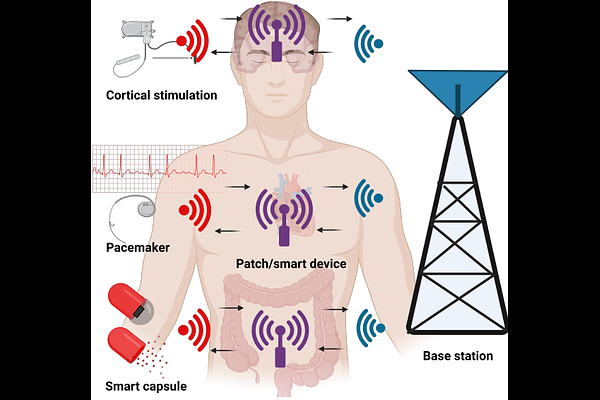
AbstractGoal-oriented semantic communication has recently emerged in wireless sensor-actuator networks, emphasizing the meaning and relevance of information over raw data delivery, thereby enabling resource-efficient telecommunication. This paradigm offers significant benefits for intra-body or implantable sensor-actuator networks, including dramatic reductions in band-width requirements, latency, and power consumption. In this paper, we address a patch-based energy-efficient anomaly detection method for smart capsule endoscopy. We propose a deep learning-based algorithm that employs the similarity between features extracted from measured images and a reference (normal) image as the detection metric. The algorithm is evaluated using a clinical dataset of capsule-captured images, combined with a simulated intra-body channel model. The results demonstrate that even with only 60% of the transmission power (relative to a standard link design for QPSK modulation) and 65% of the light intensity, the probability of anomaly detection remains above 85%, and it gradually improves as power and illumination levels increase. This improvement translates into a potential battery life extension of over 43%. The findings highlight the potential of semantic-aware, energy-efficient intra-body devices for more sustainable and effective medical interventions.