Unraveling the Comedone Switch through Single-Cell Resolution of Human Acne Lesions

Unraveling the Comedone Switch through Single-Cell Resolution of Human Acne Lesions
Duez, T.; Rolka, T.; Torocsik, D.; Reuter, H.; Al, B.; Gallinat, S.; Baumbach, J.; Holzscheck, N.
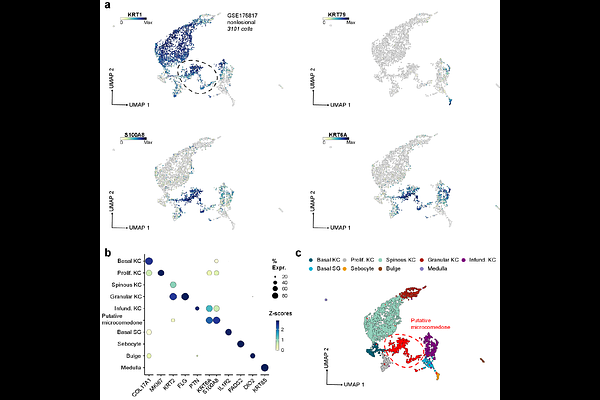
AbstractAcne vulgaris is one of the most prevalent inflammatory skin diseases worldwide, yet the molecular events initiating comedogenesis remain poorly understood. The comedone switch hypothesis proposes that acne originates from an imbalance in lineage commitment within the junctional zone of the pilosebaceous unit, promoting infundibular differentiation at the expense of sebaceous gland maintenance. However, direct evidence from human acne tissue at single-cell resolution has been lacking. Here, we integrated single-cell transcriptomic datasets from healthy skin, non-lesional skin of acne patients, and lesional acne tissue to reconstruct the earliest stages of comedogenesis. We identified a previously uncharacterized cell population in non-lesional skin with transcriptomic features consistent with a microcomedone and mapped this population across independent datasets to reconstruct the transcriptional comedone architecture. Comedonal remodeling was characterized by enhanced keratinization and inflammatory programs. Quantitative analyses supported a shift from sebaceous toward infundibular cell fate, providing first data-driven evidence for the comedone switch hypothesis in human acne. Beyond the pilosebaceous unit, we identified broader epithelial alterations, including loss of POSTN and ERRFI1 expression in basal interfollicular epidermal keratinocytes. Together, these findings provide a cell-resolved framework for human comedogenesis and identify candidate mechanisms linking genetic susceptibility, environmental triggers, and lineage imbalance within the upper hair follicle.