Fgf3 and Fgf10a regulate neuronal fasciculation through Schwann cell proliferation and infiltration in zebrafish posterior lateral line

Fgf3 and Fgf10a regulate neuronal fasciculation through Schwann cell proliferation and infiltration in zebrafish posterior lateral line
Wong, H. J.; Matsui, T.; Bessho, Y.; Akiyama, R.
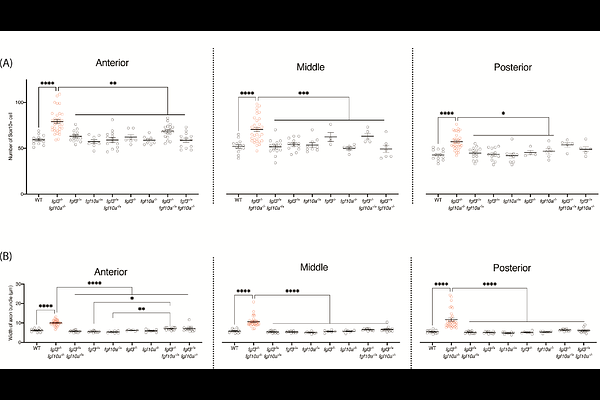
AbstractBackground: During development, axons are organized into bundles, a process known as axonal fasciculation. The zebrafish lateral line nerve has been used as a model to study axonal fasciculation; however, the underlying mechanisms are not yet fully understood. Although Fgf3 and Fgf10a are well known to regulate the migration of the lateral line primordium along which the lateral line nerve projects, their roles in the organization of the lateral line nerve itself have not been clarified. Results: fgf3,10a double mutants exhibited lateral line axonal defasciculation accompanied by an increased number of Schwann cells. Live imaging revealed a marked increase in Schwann cell proliferation and demonstrated that newly divided Schwann cells migrate along axons and infiltrate interaxonal spaces, thereby expanding these spaces and disrupting axonal fasciculation. Pharmacological manipulations further implicated a contribution of Nrg1-ErbB signaling to this phenotype. Conclusions: Our findings suggest that Fgf3 and Fgf10a are required to restrict Schwann cell proliferation and infiltration, thereby ensuring axonal fasciculation during lateral line development.