Co-targeting an AMPK--MAPK axis reprograms CAFs and suppresses PDAC

Co-targeting an AMPK--MAPK axis reprograms CAFs and suppresses PDAC
Yamamura, R.; Satoh, Y.; Fukuda, J.; Kimura, T.; Otsuka, T.; Sekiya, S.; Hirata, T.; Hata, S.; Sato, R.; Kamijo, C.; Moriguchi, T.; Kosuge, S.; Kato, T.; Urano, Y.; Hatanaka, K. C.; Tyakht, A. V.; Harada, K.; Kawamoto, Y.; Kawakubo, K.; Kuwatani, M.; Takeuchi, S.; Wada, M.; Asano, T.; Nakamura, T.; Jin, S.; Mitsuhashi, T.; Sueishi, F.; Yamagata, K.; Masamune, A.; Oshima, M.; Abe, T.; Shinohara, N.; Matsuno, Y.; Hatanaka, Y.; Tanaka, S.; Shimono, Y.; Matoba, K.; Ley, R. E.; Sakamoto, N.; Hirano, S.; Soga, T.; Fukuda, S.; Enomoto, A.; Sonoshita, M.
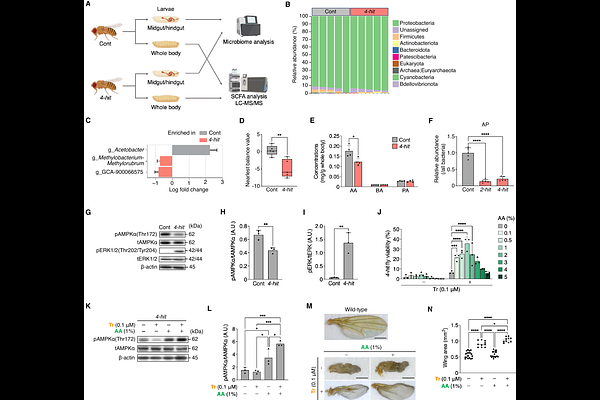
AbstractPancreatic ductal adenocarcinoma (PDAC) is a fatal cancer characterized by limited therapeutic options and a highly treatment-resistant tumor microenvironment. Beyond tumor-intrinsic genetic alterations, growing evidence indicates that host--microbiome interactions influence cancer progression through microbial metabolites. However, how microbiome-derived metabolites influence oncogenic signaling in PDAC remains unclear. Here, integrated profiling revealed a consistent reduction of the microbial metabolite acetic acid in fecal samples from treatment-naive patients with PDAC and in a genetically defined Drosophila model recapitulating key PDAC driver alterations. Acetic acid activates AMP-activated protein kinase, and pharmacological activation of this pathway together with inhibition of mitogen-activated protein kinase signaling suppressed tumor growth in fly and mouse models. Combined pathway targeting restored AMPK activity and suppressed cancer-associated fibroblast activation. These findings identify a microbiome-associated metabolic vulnerability in PDAC and suggest that coordinated targeting of metabolic and oncogenic signaling may restrain tumor progression and improve therapeutic strategies.