Chronic Polystyrene Nanoplastics Exposure Reprograms Gene Expression, Alternative Splicing, and Disrupts Host Microbiome Metabolic Networks to Promote Atherosclerosis in LDLr- Knockout Mice

Chronic Polystyrene Nanoplastics Exposure Reprograms Gene Expression, Alternative Splicing, and Disrupts Host Microbiome Metabolic Networks to Promote Atherosclerosis in LDLr- Knockout Mice
Khan, A.; Cardenas Vasquez, D. E.; Si, Y.; S. Vidar, W.; Wu, K.; Chiu, N.; Jia, Z.
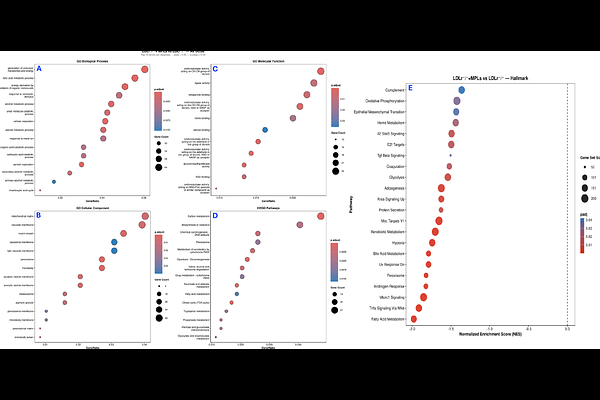
AbstractAlthough micro- and nanoplastics have been detected in human atherosclerotic plaques, their mechanistic contribution to disease pathogenesis remains poorly defined. Most experimental studies have used microplastics (particles > 1 micrometer) in non-atherosclerotic animal models or the ApoE KO; mouse, relying on short-term exposure or single-pathway analyses, whereas the chronic cardiovascular effects of nanoplastics (< 100 nm) remain exceedingly scarce, despite their higher biological reactivity and greater tissue penetrance. To address this gap, this study employs a multi-omics approach to investigate the chronic (12-week) oral exposure to 80 nm polystyrene nanoplastics in LDLr KO; mice. We uniquely integrate aortic plaque quantification, hepatic transcriptomics with global alternative splicing profiling, gut microbiome 16S sequencing, and liver untargeted metabolomics to construct a unified host-microbiome-metabolite network. Nanoplastics exposure significantly exacerbates aortic lipid deposition, suppresses hepatic detoxification and anti-atherogenic lipid pathways primarily through transcriptional and post-transcriptional level changes driven by alternative splicing events (e.g., intron retention and isoform switching), and induces gut dysbiosis marked by a reduction in SCFA-producing commensals and enrichment of pro-atherogenic pathobionts-perturbations that correlate with specific hepatic functional modules. Metabolomic changes, including decreased levels of the glutathione precursor gamma-glutamylcysteine and the choline-derived metabolite neurine, implicate oxidative stress and TMAO-related pathways. Cross-species validation using human atherosclerotic transcriptomic and metagenomic datasets supports the clinical translatability. By integrating multi-level biological responses, this work establishes nanoplastics as an environmental cardiovascular risk factor and uncovers novel regulatory mechanisms involving splicing-associated transcriptional reprogramming and gut-liver crosstalk, offering potential early-warning biomarkers and therapeutic targets for nanoplastics-associated cardiovascular disease.