Ovarian cancer-on-chip for patient-specific profiling of treatment responses to sequential chemotherapy and PD-L1 blockade

Ovarian cancer-on-chip for patient-specific profiling of treatment responses to sequential chemotherapy and PD-L1 blockade
Ploeger, S.; Anderle, N.; Wegner, E.; Schmidt, T.; Roosz, J.; Maulana, T. I.; Christ, L.; Engler, T.; Hartkopf, A.; Koch, A.; Brucker, S. Y.; Schenke-Layland, K.; Rosa, A.; Schmees, C.; Loskill, P.
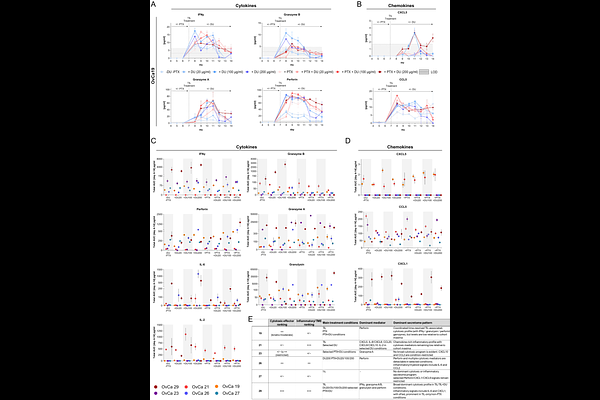
AbstractOvarian cancer (OvCa) ranks as the most lethal gynecological malignancy in women worldwide. This complex disease, which can develop independently of a woman's age, is characterized by late diagnosis, pronounced tumor heterogeneity, and an immunosuppressive tumor microenvironment (TME). Incremental diagnostic tools that could better inform clinicians on potential therapy resistance or subsets of patients that could benefit from new drug modalities represent a critical unmet need to improve patient care and potentially the identification of new biomarkers. This study aimed to establish a reconfigurable patient-derived OvCa-on-chip platform for longitudinal functional profiling of tumor cell death, immune activation, and patient-specific responses to TIL-mediated killing, PD-L1 blockade, and sequential chemo-immunotherapy. Patient-derived OvCa microtumors (PDM) were integrated with sequential integration of autologous tumor-infiltrating lymphocytes (TILs) into a perfusable microfluidic chip in the presence of different single and combination treatment regimens of chemotherapy and immune checkpoint inhibitors (ICIs). Treatment responses were assessed by longitudinal quantification of caspase-cleaved cytokeratin 18 (ccCK18) as marker of apoptotic epithelial tumor cell death, as well as cytokine/chemokine release in chip effluents, and multiplex flow cytometry-based characterization of autologous TIL subsets. The perfusable OvCa-on-chip platform supported long-term culture of PDM while maintaining key structural and microenvironmental features of the primary tumor. Multidimensional analyses, including time-resolved assessment of tumor cell death, secretome profiling and correlative analysis of autologous TIL subsets revealed patient-specific tumor-immune response patterns and heterogenous sensitivity to TIL-mediated killing, PD-L1 blockade, and sequential chemo-immunotherapy. Correlation analyses identified treatment-dependent associations between specific TIL phenotypes and functional tumor cell killing. PD-1 expressing CD4+ TIL subsets correlated with enhanced tumor cell killing, whereas terminally exhausted CD8+PD-1+Tcf1+ TILs negatively correlated with durvalumab responses. In contrast, tumor-reactive CD8+CD39+ TILs were associated with improved responses under sequential chemo-immunotherapy conditions. Collectively, this OvCa-on-chip system represents a complex in vitro model (CIVM) that combines 3D tumor tissue with autologous immune cells in a microfluidic platform. Resembling a physiologically relevant human preclinical platform, it allows for the time-resolved functional assessment of patient-specific responsiveness to OvCa therapies, with direct implications for personalized treatment stratification.