The mutational landscape of innervation axes in cancer

The mutational landscape of innervation axes in cancer
Batool, A.; Arora, C.; Nemati Fard, L. A.; Passannanti, R.; Varisco, M.; Vukotic, R.; Capsoni, S.; Cattaneo, A.; Raimondi, F.
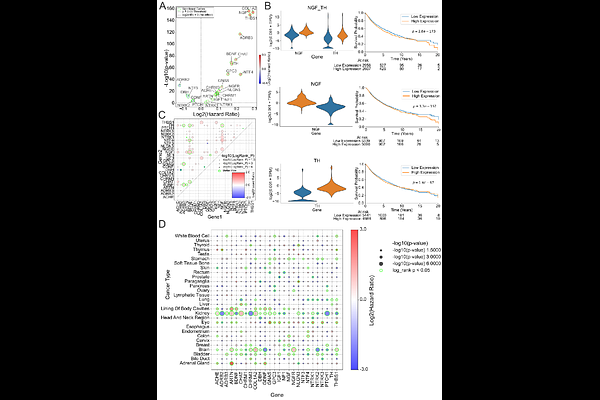
AbstractThe mutational landscape of neural innervation axes in cancer has garnered increasing attention due to their significant influence on tumorigenesis, metastasis, and treatment resistance. This study provides an overview of the alterations of neural signaling pathways based on multi-omics data analysis. In particular, we conducted a comprehensive analysis of mutations in key genes associated with neurotrophin signaling, norepinephrine and cholinergic pathways, alongside paracrine and synaptogenic factors. Our findings reveal that 65% of patients in a pancancer cohort exhibit at least one somatic alteration in these pathways, with neurotrophin genes being the most frequently altered. Notably, alterations in these genes (e.g., NGF) correlate with poor patient survival across various cancer types, suggesting their oncogenic potential. We also identified significant co-occurrence of mutations and differential expression patterns from both bulk and single-cell RNAseq data, indicating complex interactions among these pathways that contribute to tumor innervation and neuroplasticity. This study underscores the necessity of understanding the crosstalk between neural signaling and cancer biology to improve patient stratification based on mutational profiles and identify potential therapeutic targets. Further research utilizing advanced genomic techniques is essential to elucidate the mechanistic roles of these pathways in tumor innervation.