A general methodology for liver sinusoid fenestration analysis based on 3D electron microscopy data

A general methodology for liver sinusoid fenestration analysis based on 3D electron microscopy data
Pohar, C.; Rekik, Y.; Phan, M. S.; Gallet, B.; Desroches-Castane, A.; Chevallet, M.; Tinevez, J.-Y.; Tillet, E.; Vigano, N.; Jouneau, P.-H.; Deniaud, A.
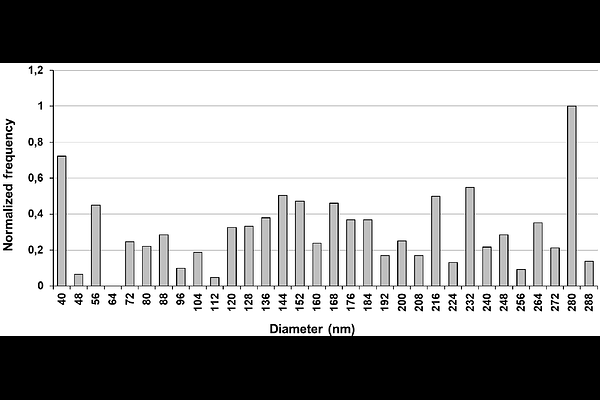
AbstractThe liver has a complex architecture composed of millions of lobules. Within these lobules, hepatocytes, the main hepatic cells, are organized in rows separated by blood capillaries known as sinusoids. These capillaries are lined by liver sinusoidal endothelial cells (LSEC) that form a very specific fenestrated endothelium essential for the exchange of metabolites and proteins between the blood and hepatocytes. Alterations in the size and number of LSEC fenestrations are associated with the onset and the progression of various liver diseases. The analysis of liver architecture is thus of utmost importance for advancing our knowledge of liver ultrastructure and its alterations. Liver architecture has been studied since decades, mainly using 2D electron microscopy, and more recently using advanced super-resolution fluorescence microscopy. In recent years, volume electron microscopy techniques, including focused ion beam-scanning electron microscopy (FIB-SEM) progressed and nowadays enable the 3D reconstruction of biological ultrastructures down to nanometer resolution. However, the analysis of large volumes (e.g., several tens of microm3) remains challenging due to various constraints in the segmentation of large datasets. In the current study, we developed a workflow to semi-automatically segment hepatic sinusoids from FIB-SEM mice liver datasets using the CNN-based (convolutional neural network) tool known as nnU-Net, after fine-tuning a ground truth model. We also implemented tools for semi-automatic quantification of LSEC fenestrae diameters and sinusoid porosity from segmented datasets. This workflow enabled us to compare the distribution of LSEC fenestrae diameters in wild-type versus Bmp9-deleted mice, a hepatic factor known to be involved in fenestration maintenance. Our results confirm the importance of BMP9 for LSEC differentiation. Therefore, the developed methodology represents a valuable tool for characterizing the fenestrated endothelium under various physiological and pathological conditions.