An integrated atlas of RNA to protein concordance across human tissues and cell types

An integrated atlas of RNA to protein concordance across human tissues and cell types
Finney, C. A.; Shvetcov, A.
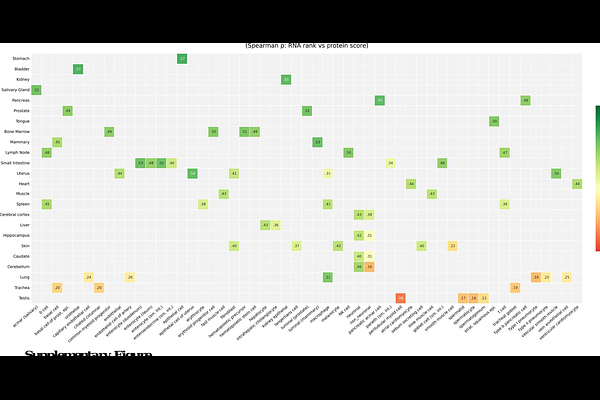
AbstractDifferential expression studies, single-cell atlases, and target discovery pipelines measure RNA as a proxy for protein. Across human tissues, RNA explains only 40 to 60% of the variance in protein, and no framework resolves which genes reliably translate RNA into protein. We present an integrated atlas that matches single-cell transcriptomics from Tabula Sapiens and the Human Brain Cell Atlas to cell type-resolved immunohistochemistry from the Human Protein Atlas, comprising 488,190 observations across 11,154 genes, 24 tissues, and 53 cell types. For each gene we defined a suppression rate and separated genes into concordant, variable, and suppressed classes. The pooled correlation of {rho} {approx} 0.4 reflects the mixing of these classes, and concordance depends on the interaction between gene and tissue. Suppression is predictable from gene sequence alone and traces to reduced translational efficiency and assembly-dependent degradation rather than to mRNA decay. The suppressed class is enriched for drug targets nominated on clinical evidence but not those validated by compound activity. We implement these classifications in an R package, concordR, and audit proteins nominated as brain-derived targets in neurodegeneration, where almost none survive at the protein level. Our atlas establishes RNA to protein concordance as a measurable property of the individual gene.