Allele-specific chromatin modifications of HPV-associated extrachromosomal DNAs in cervical cancer

Allele-specific chromatin modifications of HPV-associated extrachromosomal DNAs in cervical cancer
MacLennan, S.; Ng, M.; Porter, V. L.; Corbett, R. D.; Pandoh, P.; Trinh-Hamilton, D.; Coope, R.; Zhao, Y.; Marra, M. A.
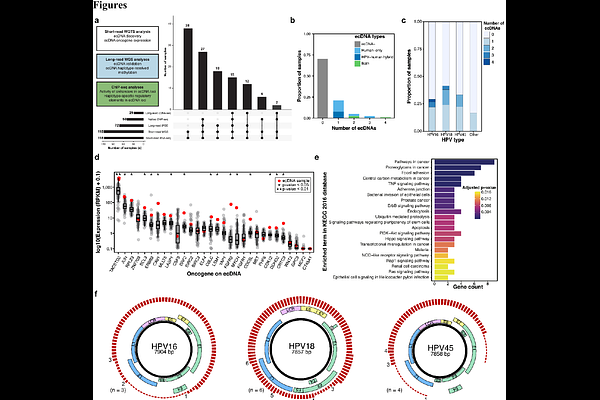
AbstractCervical cancer, a human papillomavirus (HPV) driven malignancy, is the fourth deadliest cancer in females. Approximately 25% of primary cervical cancers contain circular structures called extrachromosomal DNAs (ecDNAs), which can be entirely composed of human DNA (human-only ecDNAs) or a combination of HPV and human DNA sequences (HPV-human hybrid ecDNAs). Human-only ecDNAs harbour cancer-driving oncogenes, but epigenetic differences between human-only and HPV-human hybrid ecDNAs are unexplored. Here we report that 30% of cervical cancers contained at least one ecDNA. HPV-human hybrid ecDNAs contained more active enhancers and promoters than human-only ecDNAs and invariably contained the HPV oncogenes E6 and E7. These ecDNAs also contained an allelic hypomethylation region associated with putative human promoters, as well as enrichments for motifs associated with recombination hotspots. By leveraging long-read WGS phasing data to separate ChIP-seq data into alleles, we revealed allele-specific peaks in enhancers and promoters on ecDNAs, of which HPV-human hybrid ecDNAs contained a higher density. Overall, we found HPV-human hybrid and human-only ecDNAs differed in their regulation, often at an allele-specific level. Our study more firmly establishes the importance of epigenome disruption in cervical cancer and how structural variation, particularly surrounding HPV integration sites, may shape the surrounding regulatory architecture.