Large-scale automated detection reveals pervasive sex imbalance in biomedical research

Large-scale automated detection reveals pervasive sex imbalance in biomedical research
Valtadoros, L. E.; Hicks, P.; Yuan, H.; Ahmadian, M.; Johnson, K. A.; Krishnan, A.
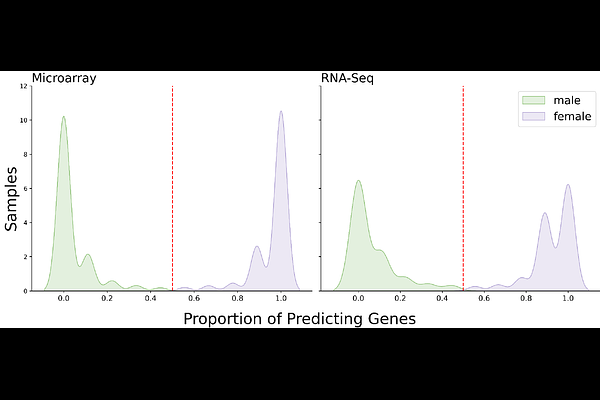
AbstractSex is a critical biological variable that impacts disease risk, progression, and treatment response across virtually every organ system. However, decades of biomedical research have relied primarily on male study subjects, leaving large gaps in our understanding of female-specific disease biology. Quantifying the extent of this imbalance across thousands of disease areas and millions of publicly available biological samples has remained computationally intractable. Here, we present a multimodal computational framework that infers the biological sex of ~230,000 publicly available human transcriptome samples and links inferred sex labels to disease terms extracted from ~9,000 associated study records and ~5,000 publication abstracts to quantify sex imbalance at scale. Applying this approach revealed that the majority of disease terms with the largest research-derived sex imbalance are skewed toward male representation, including areas with no known biological justification for that imbalance. After adjusting for global sex-specific disease prevalence to isolate biologically unjustified imbalance, up to 58% of all disease terms showed male-leaning association. Diseases including glioblastoma, cirrhosis, idiopathic pulmonary fibrosis, and schizophrenia emerged as critically understudied in females despite affecting both sexes comparably. These findings provide a principled, data-driven basis for prioritizing compensatory research efforts and offer a reusable framework for ongoing monitoring of sex representation in the biomedical literature.