Efficient CRISPR/Cas9-mediated homology independent sequence replacement in vivo and non-dividing primary cells

Efficient CRISPR/Cas9-mediated homology independent sequence replacement in vivo and non-dividing primary cells
Dang, T. N.; Roman, A.; Zimmer, A.; Lebedin, M.; Bahry, E.; Grifol, C. M.; Esser, M.; Sevim Wunderlich, S.; Miller, D. C.; Diecke, S.; Kuehn, R.
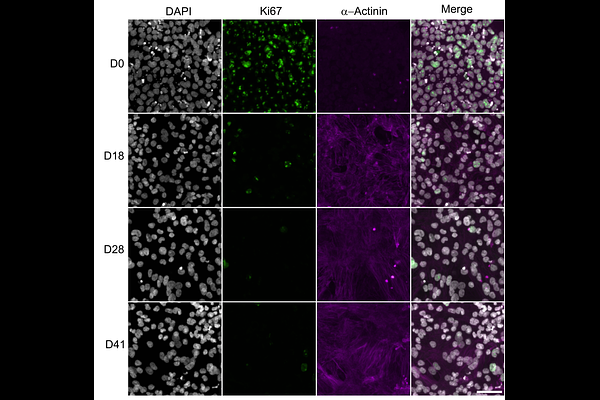
AbstractPrecise sequence replacement in non-dividing cells remains a major challenge for genome editing. Here we show that REPLACE (Rational end-joining protocol delivering a targeted sequence exchange), a homology-independent CRISPR/Cas9-based replacement strategy, enables exon- and gene-scale substitution in primary cells, in vivo tissues and post-mitotic human cardiomyocytes. REPLACE uses two guide RNAs to excise a defined genomic region and inserts a donor lacking homology arms through non-homologous end joining (NHEJ). In primary mouse hepatocytes, REPLACE mediated exon replacement in 35% of all cells. In adult mouse liver, editing efficiency could be increased to ~20% when Cas9-sgRNA ribonucleoproteins were delivered via engineered virus-like particles (eVLPs) together with an adeno-associated virus (AAV) donor. REPLACE also supported large-segment replacement, enabling one-step exchange of a ~27-kb mouse Ace2 interval with the human ACE2 coding region in zygotes, followed by germline transmission and tissue-specific expression. Finally, we applied REPLACE to a disease-relevant mutation that is not readily addressable by base editing and was poorly corrected by prime editing in post-mitotic cardiomyocytes. At the LMNA locus, REPLACE corrected the K117fs frameshift mutation in patient-derived post-mitotic cardiomyocytes with precise exon replacement and restored Lamin A/C protein expression and nuclear lamina localization. These findings establish REPLACE as a versatile platform for homology-independent sequence replacement and as a complementary approach for genetic correction in settings where homology-directed repair (HDR), base editing (BE) or prime editing (PE) are inefficient or not applicable.