Unified function of FACT in mammalian chromatin replication and transcription, dissolving and restoring nucleosomes to counteract genome aggregation

Unified function of FACT in mammalian chromatin replication and transcription, dissolving and restoring nucleosomes to counteract genome aggregation
Frater, R. C. M.; Jensen, R. R.; Olle Lopez, J.; Flury, V.; van den Berg, J.; Lunow Bournonville, A.; Alcaraz, N.; Wang, S.; Richter, H.; Yang, M.; Du, Q.; van Oudenaarden, A.; Ramani, V.; Krietenstein, N.; Groth, A.
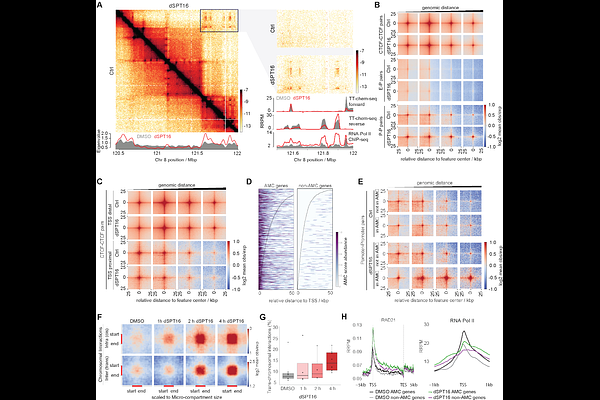
AbstractNucleosomes with their associated modifications underlie genome organisation and regulation. Replication and transcription require nucleosome disassembly to access the DNA template. How this is orchestrated without jeopardizing chromatin function remains unknown. Here, we reveal a general, global requirement of the histone chaperone FACT in mammalian replication, transcription and chromatin maintenance. Upon acute FACT depletion, replisome and RNA polymerase progression is halted genome-wide and chromatin structure in their wake collapses with reduced nucleosome occupancy, irregular spacing and intermediate assemblies. Chromatin states deteriorate as modified histones are lost due to a lack of histone recycling. Chromatin fiber disorder further manifests in the 3D genome, triggering active genes to coalesce in aberrant microcompartments. This establishes a unifying mechanistic basis for mammalian chromatin replication and transcription, with FACT mediating nucleosome disruption and re-assembly and thereby guarding against spurious chromatin aggregation. Nucleosome organization can therefore dynamically regulate genome architecture.