From Adipose to Limbus: Deciphering the Paracrine Effects of MSC Secretomes on Oxidative Stress-Induced RPE Dysfunction

From Adipose to Limbus: Deciphering the Paracrine Effects of MSC Secretomes on Oxidative Stress-Induced RPE Dysfunction
Aydemir, A. D.; Canbulat, Z.; Hasanreisoglu, M.
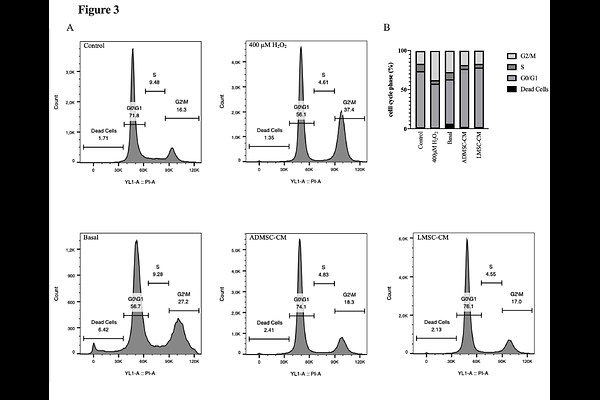
AbstractThis study investigates the therapeutic potential of secretomes derived from Adipose-derived Mesenchymal Stem Cells (ADMSC-CM) and Limbal-derived Mesenchymal Stem Cells (LMSC-CM) against oxidative stress induced damage in Retinal Pigment Epithelium (RPE) cells. RPE dysfunction, often triggered by oxidative stress, is a hallmark of various retinal degenerations. Here, we induced RPE injury using H2O2 and evaluated the restorative effects of both MSC-conditioned media (CM). Our results demonstrated that both ADMSC-CM and LMSC-CM significantly enhanced cell viability and successfully reversed H2O2-induced G2/M phase cell cycle arrest. While oxidative stress triggered a pro-inflammatory response characterized by elevated IL-1{beta}, IL-6, and IL-10 expression, MSC-CM treatment, particularly ADMSC-CM, effectively modulated these levels and suppressed the p38 MAPK signaling pathway. Furthermore, MSC-CM reduced the Bax/Bcl-2 ratio, indicating an anti-apoptotic effect, and appeared to stabilize autophagic flux. Crucially, in terms of safety and secondary complications, neither secretome exhibited pro-angiogenic tendencies; instead, they significantly inhibited HUVEC migration and invasion compared to the H2O2 damaged group. These findings suggest that both ADMSC and LMSC secretomes provide a potent multi-targeted therapeutic effect, making them promising candidates for cell-free therapies in retinal diseases.