Identification of a microRNA with a mutation in the loop structure in the silkworm Bombyx mori

Identification of a microRNA with a mutation in the loop structure in the silkworm Bombyx mori
Harada, M.; Tabara, M.; Kuriyama, K.; Ito, K.; Bono, H.; Sakamoto, T.; Nakano, M.; Fukuhara, T.; Toyoda, A.; Fujiyama, A.; Tabunoki, H.
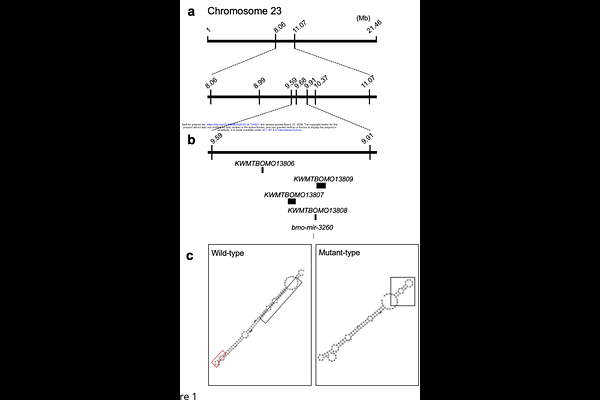
AbstractMicroRNAs (miRNAs) play essential roles in the posttranscriptional regulation of gene expression in organisms. In the process of synthesizing mature miRNAs from miRNA precursors, the miRNA precursors are cleaved via Dicer at their loop structure, after which the miRNA precursors become mature and regulate transcription. However, the consequences of altering the loop sequence are not fully understood. The silkworm Bombyx mori is a lepidopteran insect with many genetic strains. We identified a mutant of the miRNA miR-3260 whose the part of the loop structure was lacking in a silkworm strain with translucent larval skin. Here, we aimed to analyze the role of wild-type miR-3260 and the influence of the mutation of the loop structure in B. mori. First, we identified the genomic region responsible for the translucent larval skin phenotype and determined that the mutated miR-3260 nucleotide sequences. Then, we predicted the binding partners of wild-type miR-3260 using the RNA hybrid tool and found two juvenile hormone (JH)-related genes as targets of wild-type miR-3260. Next, we assessed the relationships between miR-3260 and JH and found that miR-3260 was highly expressed in the Corpora allata and its expression responded to JH treatment. Meanwhile, miR-3260 mimic and inhibitor did not induce the typical phenotypes associated with JH in B. mori. Then, we compared the dicing products from wild-type and mutant miR-3260 precursors and observed that neither form underwent Dicer-mediated cleavage when the loop structure was altered. These results suggest that loop mutations in the miR-3260 precursor may not influence dicing activity, consistent with the lack of observable phenotypic effects.