MInt-HDX: Leveraging Hydrogen-Deuterium Exchange Mass Spectrometry and Machine-Learning to Improve Protein-Ligand Docking.

MInt-HDX: Leveraging Hydrogen-Deuterium Exchange Mass Spectrometry and Machine-Learning to Improve Protein-Ligand Docking.
Lowe, V.; Smith, A. K.; Parakra, R.; Toci, E.; Freel Meyers, C. L.; Deredge, D.
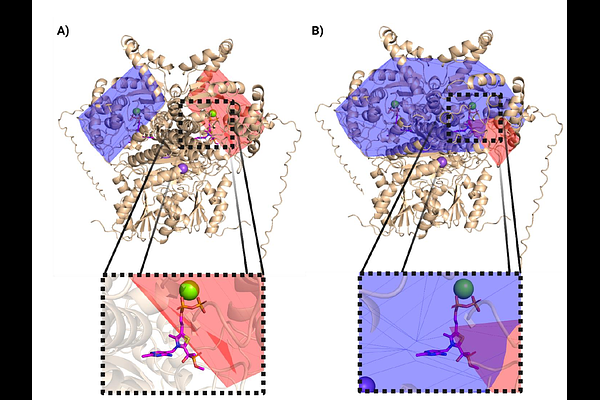
AbstractUnderstanding protein structural dynamics is central to elucidating biological function and guiding therapeutic discovery. Hydrogen-deuterium exchange mass spectrometry (HDX-MS) typically offers peptide-level, and sometimes residue-level, time-dependent insights into protein structure, conformational dynamics and/or ligand binding. Yet, translating HDX-MS data into atomic-resolution insights and deriving mechanistic understanding remains a key challenge. Integrative strategies which utilize HDX-MS to inform computational modeling or simulations, traditionally leverage HDX-MS data with physics-based approaches through the calculation of protection factors models. Here, we developed MInt-HDX, a hybrid physics-based, machine-learning framework trained on differential HDX-MS signatures across 11 protein-ligand systems or 1032 individual peptides, using eXtreme Gradient Boosting (XGBoost) to guide small-molecule ligand docking and pose selection. By leveraging XGBoost-predicted interacting residues with three-dimensional clustering and convex-hull geometric algorithms, MInt-HDX first generates HDX-guided candidate docking sites in 3D for physics-based molecular docking and then, following docking, employs HDX-MS-informed XGBoost filtering and scoring functions for ligand-pose ranking. MInt-HDX was validated across 3 protein-ligand systems, consistently resulting in Ligand-RMSD within 3 [A] of the crystallographic ligand conformation, individual steps of MInt-HDX were optimized and its overall performance was assessed against HDX-MS data quality factors and benchmarked against common physics-based and machine learning based docking approaches. Together, this work highlights how machine learning, informed by HDX-MS and aided by physics-based approaches, can bridge the gap between solution-phase HDX-MS data and structural modeling to accelerate protein-ligand discovery pipelines.