JAK and TYK2 inhibitors differentially modulate interferon/TNF-driven inflammation, stemness and proliferation in the colonic epithelium of ulcerative colitis

JAK and TYK2 inhibitors differentially modulate interferon/TNF-driven inflammation, stemness and proliferation in the colonic epithelium of ulcerative colitis
Sridhar, A.; Walaas, G. A. E.; Saterstad, S.; Myrmehl, J. P. D.; Cermakova, R.; Myrseth, M. G.; Grundel, L.; Hansen, M. D.; Otterstad, M.; Hoivik, M. L.; Ostvik, A. E.; Bakke, I.; Bruland, T.
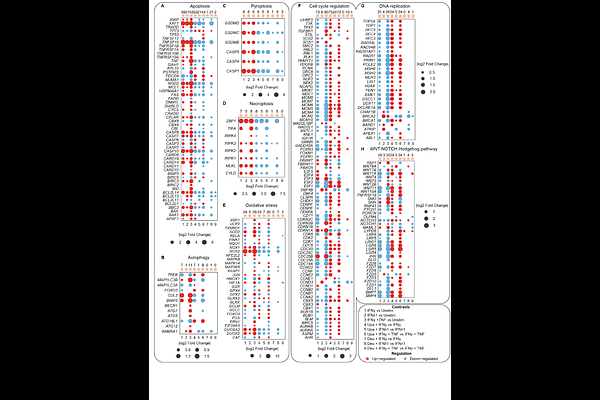
AbstractBackground: Janus kinase (JAK)-Signal Transducer and Activator of Transcription (STAT) pathway is a key regulator of inflammatory signaling in ulcerative colitis (UC). While most studies have focused on JAK/tyrosine kinase 2 (TYK2) inhibitors effects on immune cell-mediated responses, their direct epithelial impact remains less known. We investigated epithelial-specific transcriptional responses to JAK/TYK2 inhibitors using patient-derived intestinal epithelial organoids (IEOs) under UC-relevant conditions. Methods: Colonic IEOs from UC patients were pretreated with various concentrations of tofacitinib, upadacitinib, filgotinib, brepocitinib, and deucravacitinib for 1 hour prior to stimulation with IFN{beta}, IFN{gamma}, or IFN{lambda}1 for Western blot analysis of STAT1/3 and TYK2 phosphorylation. For transcriptomic profiling, IEOs were pretreated with upadacitinib or deucravacitinib for 16 hours, followed by 8-hour stimulation with IFN{gamma}, IFN{lambda}1, TNF, or IFN{gamma} + TNF. Bulk RNA sequencing assessed differential gene expression, and multiplex assays quantified chemokine secretion. Ki67 immunohistochemistry on colonic biopsies from healthy controls, and UC patients with and without JAK inhibitors-treatment were assessed for epithelial proliferation. Results: IFNs induced distinct STAT1/3 and TYK2 activation, with IFN{beta}/{gamma} eliciting stronger phosphorylation than IFN{lambda}1. All JAK/TYK2 inhibitors regulated pSTAT1/3 and pTYK2, with upadacitinib most strongly inhibiting pSTAT1/3 and deucravacitinib selectively targeting pTYK2. Transcriptomic analysis revealed extensive cytokine-driven gene regulation, with IFN{gamma} + TNF eliciting the strongest response. Enrichment analysis highlighted upregulation of IFN signaling, antigen presentation, and innate immune pathways, alongside downregulation of cell-cycle processes. Drug-response profiling showed minimal transcriptional changes with upadacitinib and deucravacitinib alone. Upadacitinib broadly modulated IFNs and IFN{gamma} + TNF-regulated genes, attenuating JAK-STAT, NF{kappa}B, antiviral, and cell death pathways, while restoring genes linked to mucosal healing. Upadacitinib also reduced IFNs and IFN{gamma} + TNF-driven chemokine genes and protein secretion. In contrast, deucravacitinib showed selective, potent inhibition of inflammatory genes under IFN{lambda}1-stimulation. Both inhibitors minimally impacted TNF-driven pathways. Ki67 immunohistochemistry confirmed enhanced epithelial proliferation in JAK inhibitor-treated UC patients regardless of mucosal inflammation status. Conclusions: Our findings provide novel evidence that JAK/TYK2 inhibitors influence epithelial transcriptional programs associated with inflammation and mucosal healing. Upadacitinib demonstrated broader modulation of cytokine-driven gene networks compared to TYK2-selective inhibition. These findings provide insight into epithelial-specific drug actions and support precision approaches for UC therapy.