Targeting Autophagy Accelerates Intestinal Repair after Acute Ionizing Radiation

Targeting Autophagy Accelerates Intestinal Repair after Acute Ionizing Radiation
Chaurasia, M.; Singh, A.; Natarajan, K.; Sharma, K.
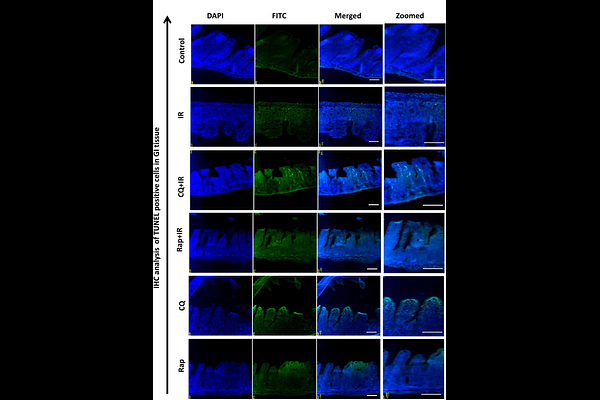
AbstractRadiation exposure induces systemic and cellular damage, contributing to acute radiation syndrome and long-term effects such as premature aging and carcinogenesis. At the cellular level, radiation triggers apoptosis, mutation, and transformation through oxidative damage and activation of pathways including ER stress-mediated autophagy. Autophagy plays a context-dependent dual role in stressed cells, but its contribution to intestinal recovery after acute radiation remains unclear. Here, we evaluated combinatorial radiomodification using gamma radiation (8 Gy) and autophagy modulators in whole-body irradiated C57BL/6 mice (8-10 weeks old, n = 10). Mice were treated with autophagy inducers or inhibitors and euthanized at 3-, 8-, and 30-day post-irradiation. The jejunal-ileal region was analyzed via antioxidant assays, immunoblotting, H&E staining, and immunohistochemistry. Radiation significantly altered oxidative stress and autophagy markers, including increased LC3-II and decreased SQSTM1/p62. Autophagy induction enhanced intestinal proliferation (as measured by Ki-67), whereas inhibition impaired regeneration. Rapamycin pretreatment improved survival and reduced markers of intestinal injury following 8 Gy total body irradiation (TBI), whereas chloroquine exacerbated several injury-associated parameters. Overall, our findings suggest that targeted modulation of autophagy is a promising strategy for alleviating radiation-induced gastrointestinal injury and provide mechanistic insights relevant to therapeutic development.