Red yeast rice-derived MKA ameliorates cardiac hypertrophy in hypertensive rats by inhibiting ERK1/2/c-Fos pathway

Red yeast rice-derived MKA ameliorates cardiac hypertrophy in hypertensive rats by inhibiting ERK1/2/c-Fos pathway
Tan, R.; Yang, D.; Liu, K.; LIU, J.; Li, N.; Sun, M.; Tan, X.; Hu, Q.; Zhang, C.
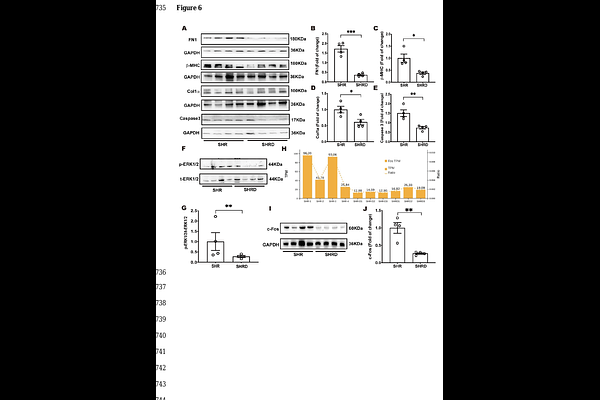
AbstractBackground: Cardiac hypertrophy is a key pathological process in hypertensive heart failure, yet current antihypertensive therapies do not directly target it. Red yeast rice (RYR), rich in monacolin K {beta}-hydroxy acid (MKA), is known for lipid-lowering effects, but its potential to ameliorate cardiac hypertrophy is unreported. Purpose: To investigate the effects of RYR-derived MKA on cardiac hypertrophy in spontaneously hypertensive rats (SHR) and elucidate its molecular mechanisms. Methods: Spontaneously hypertensive rats (SHR) were treated with 0.6% red yeast rice for 8 weeks to assess its effects on blood pressure, cardiac function (echocardiography), cardiac hypertrophy and fibrosis (histopathology), and multi-organ toxicity (histopathology). A multigenerational study was conducted to evaluate protective effects in offspring. Network pharmacology and transcriptomic analysis were integrated to predict molecular targets, which were subsequently validated by molecular docking and experiments. Results: Eight-week RYR treatment significantly reduced blood pressure, inhibited cardiac hypertrophy and fibrosis, and improved cardiac function without gender differences. No pulmonary, hepatic, or renal toxicity was observed. Offspring from treated parents exhibited further reduced hypertrophy upon continued treatment. Mechanistically, MKA bound ERK1/2 with high affinity, inhibiting its phosphorylation and downstream c-Fos expression, thereby downregulating hypertrophy markers. Conclusion: Red yeast rice improves hypertensive cardiac hypertrophy via MKA-mediated inhibition of the ERK1/2/c-Fos pathway. Its multi-organ safety and transgenerational effects offer a novel dual-therapy strategy for hypertension and cardiac hypertrophy.