From Metabolomics to Function: Ranking Plant Stem Cell Metabolomes for Use in Health and Cosmetics

From Metabolomics to Function: Ranking Plant Stem Cell Metabolomes for Use in Health and Cosmetics
Zemach, A.; Plaza, M. R.; Lee, B. S.; Little Dod, L.; Santiago-Rodriguez, E.; Simmons, D.; Palomares, M.; Talavera-Adame, D.; Newman, N.
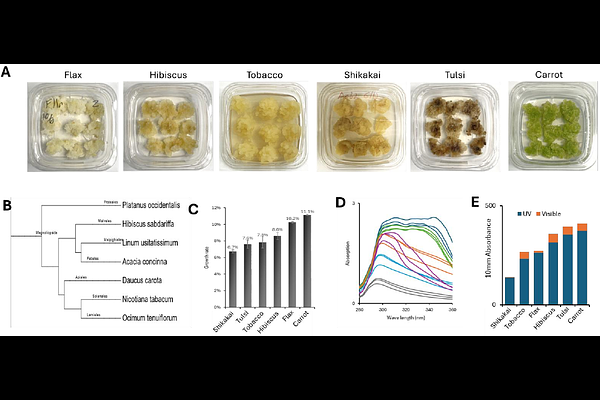
AbstractBackground: Plants produce diverse metabolites with potential benefits for human health. However, the metabolomes of plant callus cultures-cell cultures analogous to stem cells-remain poorly characterized in terms of their functional relevance. Methods: We profiled the metabolomes of six plant calli: Acacia concinna (Shikakai), Daucus carota (carrot), Hibiscus sabdariffa (hibiscus), Linum usitatissimum (flax), Ocimum sanctum (tulsi), and the Nicotiana tabacum Bright-Yellow 2 (BY-2) cell line. To facilitate functional interpretation, we developed Metabolite2Function (M2F), a pipeline that annotates metabolites with biological functions using scientific literature and large language modeling. Results: Untargeted metabolomics identified 177 metabolites, revealing clustering patterns independent of genetic relationships, culture age, or growth rate. Tulsi and carrot calli exhibited enrichment in metabolites relative to the tobacco reference line, whereas flax and hibiscus were comparatively depleted. Most metabolites varied across at least four calli, and 10% were unique to a single species. Using M2F, we annotated 87 metabolites with beneficial activities, including antioxidant, anti-glycation, anti-inflammatory, and anti-senescence functions, as well as skin-related effects such as collagen production and brightening. Notably, antioxidant and anti-senescence metabolite levels correlated with corresponding biological activities in human cells. Conclusions: Plant callus cultures generate distinct and functionally diverse bioactive metabolomes. M2F provides a scalable framework for systematic functional annotation relevant to human health and cosmetic applications.