Autologous skin cell suspensions established by the VeritaCell method accelerate healing and suppress scarring-associated cutaneous thickening in a rat wound model in vivo

Autologous skin cell suspensions established by the VeritaCell method accelerate healing and suppress scarring-associated cutaneous thickening in a rat wound model in vivo
Peake, M.; Volrats, O.; Pilipenko, V.; Upite, J.; Sergeyev, A.; Jansone, B.; Georgopoulos, N. T.
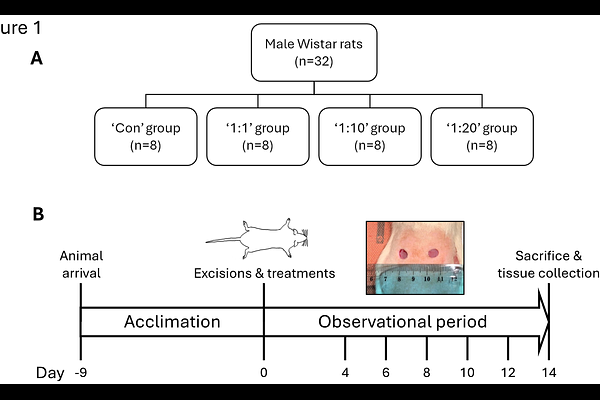
AbstractAutologous cell suspension (ACS)-based therapies are an established strategy to enhance wound repair, yet limitations in preparation workflows and donor skin requirements remain barriers to wider clinical implementation. We have previously developed VeritaCell, a rapid enzymatic disaggregation-based approach that generates highly viable skin cell populations, including epidermal stem cell-enriched fractions, and demonstrated their pro-regenerative biological properties in vitro. Here, we have evaluated the in vivo efficacy of VeritaCell-derived ACS using a rat full-thickness excisional wound model. ACS preparations were applied at donor-to-wound area ratios of 1:1, 1:10, and 1:20, and wound progression was monitored through longitudinal image-based quantification alongside histological assessment of tissue architecture. ACS-treated wounds exhibited enhanced early wound closure dynamics, with significant within-group improvements evident by Day 6. Histological analysis demonstrated improved neo-epithelial organisation and reduced epidermal thickening in the 1:10 and 1:20 groups, with the 1:10 condition showing tissue architecture most closely resembling unwounded skin. Notably, beneficial effects were observed even at low estimated cell numbers, suggesting that cell viability and biological activity may be key determinants of therapeutic efficacy. Collectively, these findings provide in vivo validation of VeritaCell-derived ACS and support the use of biologically informed donor-to-wound coverage ratios. This approach may enable effective wound repair while minimising donor skin requirements, with potential relevance for the treatment of extensive injuries such as burns.