Increases in BCL2L1 and ID1 dosage synergistically drive fate bias and competitive advantage in human pluripotent stem cells

Increases in BCL2L1 and ID1 dosage synergistically drive fate bias and competitive advantage in human pluripotent stem cells
Lei, Y.; Krivec, N.; Sarkar, A.; Duong, M. C.; Huyghebaert, A.; Janssens, C.; Verhulst, S.; van Grunsven, L. A.; AL DELBANY, D.; Spits, C.
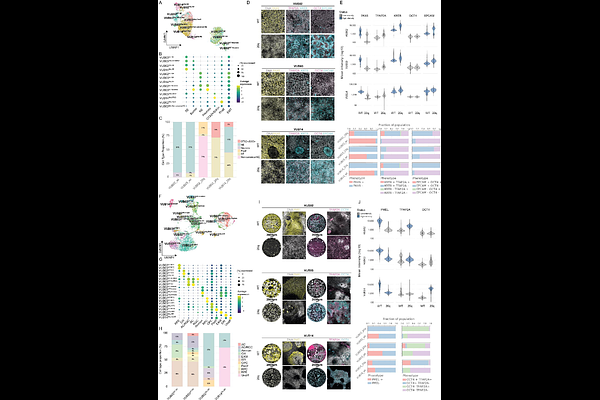
AbstractBackground Gains of chromosome 20q11.21 are among the most common culture-acquired abnormalities in human pluripotent stem cells (hPSC), conferring a well-defined survival advantage while altering differentiation capacity. However, it remains unclear whether this advantage persists during differentiation, how the aneuploidy alters ectodermal and retinal pigment epithelium (RPE) lineage specification, and which genes within the minimal amplicon drive these effects. Methods We used three isogenic human embryonic stem cell line pairs (wild-type and 20q11.21 gain) and assessed their behaviour in two neuroectoderm differentiation systems: directed neuroectoderm induction (dual SMAD inhibition) and long-term spontaneous RPE differentiation. Competitive dynamics were measured in mixed cultures, and lineage outcomes were analysed using immunostaining, gene expression profiling and single-cell RNA sequencing. To identify driver genes, we generated BCL2L1 and ID1 overexpression lines and tested their effects under both directed and spontaneous differentiation conditions. Results Across all lines and conditions, 20q cells expanded from a minor fraction to dominate mixed cultures, indicating that their competitive advantage persists beyond the undifferentiated state. Despite this dominance, pure 20q cells failed to specify to neuroectoderm or RPE. Single-cell transcriptomics revealed consistent diversion toward non-neural ectodermal and extraembryonic fates. Mechanistically, overexpression of BCL2L1 and ID1 alone or in combination impaired neuroectoderm specification, while synergistic effect of both genes promoted non-neural ectodermal outcomes under directed differentiation conditions. In spontaneous differentiation, both genes could disrupt differentiation. Conclusions The 20q11.21 gain couples a persistent survival advantage with a disruption of neural and RPE lineage competence, redirecting cells toward alternative ectodermal and extraembryonic fates. These effects arise from the combined action of two dosage-sensitive genes BCL2L1 and ID1 within the amplicon, illustrating how regional gene dosage can reshape developmental signalling responses in hPSC.