RasG12V Oncogene-Induced Epithelial Senescence and Its Relay Promotes Host Metabolic Syndrome in Drosophila

RasG12V Oncogene-Induced Epithelial Senescence and Its Relay Promotes Host Metabolic Syndrome in Drosophila
Parihar, S. S.; Tripathi, J.; Kundu, S.; Banerjee, S.; Anerao, I. M.; SINHA, P.
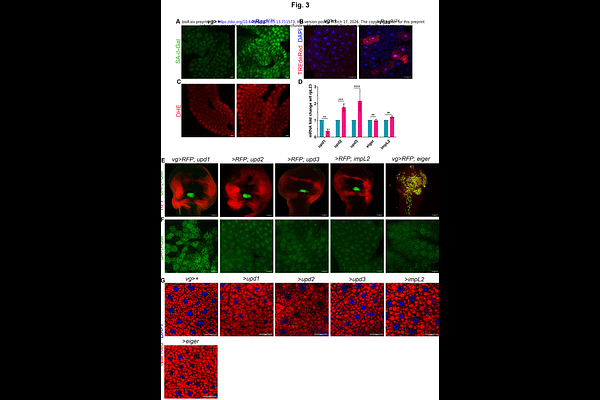
AbstractPrecancerous oncogenic activation in a target organ often induces senescence, a tumor-suppressive response known as oncogene-induced senescence (OIS). Clinical observations indicate a strong association of metabolic syndrome (MetS) with the precancerous and early-stage cancers. Notably, cells displaying OIS are characterized by a senescence-associated secretory phenotype (SASP), in which they secrete factors, including inflammatory cytokines. Thus, SASP from cells displaying OIS may trigger host MetS, which likely underpins its association with cancers, such as colorectal cancer (CRC). Here, we tested this hypothesis and show that, in Drosophila, the activated RasG12V oncogene, which is frequently implicated in human CRC, induces OIS in imaginal disc epithelium and systemically triggers host larval MetS via the conserved cytokine Upd1/IL6. Thus, the larval host with RasG12V-induced epithelial OIS displays MetS, characterized by obesity, increased lipid and glycogen accumulation in the fat body, and altered insulin signaling, marked by transition from hyperinsulinemia to insulin resistance, all at a precancerous stage. Further, we also noted hyperphagia and increased expression of insulin-like peptides (dILP2/3/5) in the brain of larvae displaying RasG12V-induced OIS. Notably, RasG12V-induced OIS is systemically relayed, leading to activation of a senescence-like program in the distant fat body. Genetic suppression of upd1 or pharmacological intervention with the senomorphic agent, Metformin, attenuated fat body senescence and mitigated MetS-associated phenotypes. Our findings thus identify a causal relationship between OIS and host MetS, suggesting its utility as an early biomarker for detecting cancers such as CRC and its potential as a prophylactic target.