Discovery and genomic characterization of a novel wild clownfish hybrid from the Philippines

Discovery and genomic characterization of a novel wild clownfish hybrid from the Philippines
Fitzgerald, L. M.; Coulmance, F.; Gaboriau, T.; Marcionetti, A.; Schmid, S.; Apag, P. T.; Diola, A. G.; Geraldino, P. J.; Salamin, N.
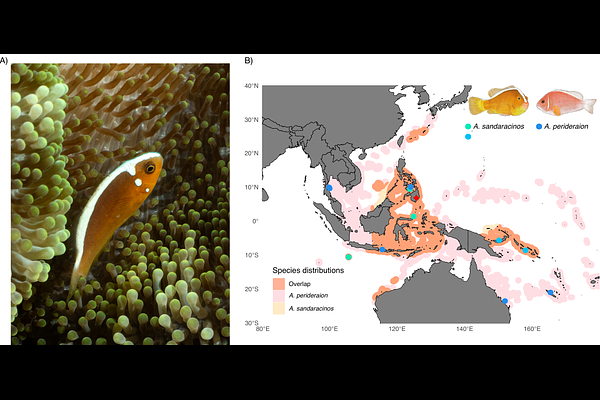
AbstractHybridization is widespread among marine fishes and can contribute to adaptation, diversification, and the generation of novel phenotypes. In clownfishes, only two wild hybrids Amphiprion leucokranos and A. thiellei have been described, yet those naturally occurring clownfish hybrids remain rarely documented. Both hybrids involve crosses with A. sandaracinos. During field surveys in the Philippines, we identified a previously undocumented clownfish individual with an unusual phenotype resembling both A. sandaracinos and A. perideraion. To characterize its origin, we combined genomic, mitochondrial, and phenotypic comparisons to previously described clownfish hybrid systems. Genome-wide PCA and admixture analyses supported mixed ancestry between A. sandaracinos and A. perideraion. Reconstruction of the mitochondrial genome placed the individual within the A. sandaracinos mitochondrial lineage. Together, these results support a hybrid origin and suggest predominant A. sandaracinos ancestry, consistent with a backcrossed descendant rather than a first-generation hybrid. Comparisons with the previously characterized hybrid A. leucokranos further revealed similarities in genomic composition and phenotype across independently derived clownfish hybrid systems. Our findings identify a previously undocumented natural clownfish hybrid and suggest that integrating genomic and field-based approaches may reveal additional cryptic hybrid systems and improve understanding of hybridization in clownfishes.