Metabolic reprogramming and partial acquisition of cancer stem cell-like phenotype in human umbilical cord-mesenchymal stem cells under hypoxia

Metabolic reprogramming and partial acquisition of cancer stem cell-like phenotype in human umbilical cord-mesenchymal stem cells under hypoxia
Kushida, Y.; Abe, K.; Oguma, Y.
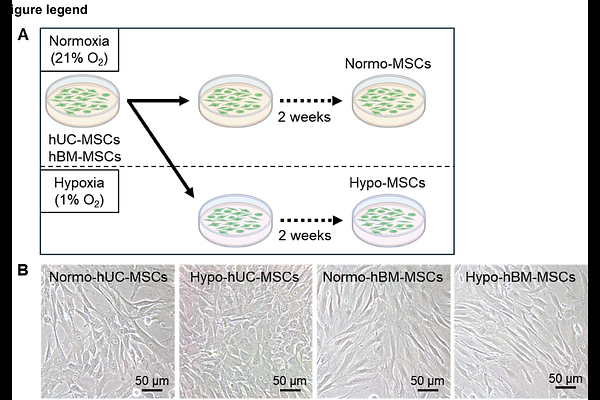
AbstractMesenchymal stem cells (MSCs) cultured in hypoxic conditions have been suggested to have more therapeutic efficacy than those cultured under normoxic conditions, and there is growing interest in using hypoxic MSCs for clinical treatment, particularly human umbilical cord (hUC)-MSCs. We investigated how hUC-MSCs and human bone marrow (hBM)-MSCs change from normoxia to hypoxia (1% O2) for 2 weeks of culture. In the growth speed and population doubling time, hUC-MSCs cultured under hypoxia exhibited a significantly higher proliferation rate beyond cancerous cells, such as human glioblastoma and breast cancer cells, while hBM-MSCs did not show a significant difference between normoxia and hypoxia, and were statistically slower than these cancerous cells. Notably, hypoxic hUC-MSCs showed upregulation of genes related to metabolic reprogramming (cholesterol biosynthesis and fatty acid metabolism pathways) and cancer stem cell-like phenotype (factors related to Wnt and Hedgehog signaling pathways, cell proliferation drivers, and apoptosis-resistance), and lesser migration and homing to the traumatic brain injury than normoxic hUC-MSCs after intravenous injection. Thus, whether hUC-MSCs cultured under hypoxia offer clinical benefits and use are safe, given their extremely accelerated proliferation rate and partial cancer stem cell-like traits, requires comprehensive and careful investigation.