MSTO1 functions as a TRiC assembly factor linking cytosolic proteostasis to mitochondrial function

MSTO1 functions as a TRiC assembly factor linking cytosolic proteostasis to mitochondrial function
Bounds, A. M.; Higuchi, C.; Hoppins, S.
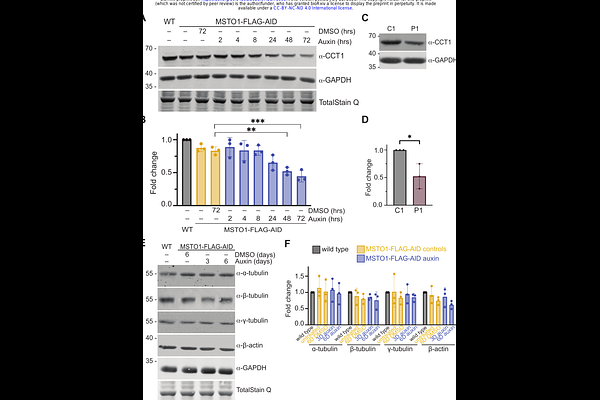
AbstractBi-allelic mutations in MSTO1 are linked to clinical disease phenotypes characteristic of mitochondrial dysfunction, including ataxia and muscular dystrophy. Consistent with this, MSTO1 patient-derived fibroblasts have fragmented mitochondria and a striking loss of mtDNA. Although MSTO1 has been implicated in regulating mitochondrial fusion, the molecular function of this cytosolic protein in vertebrate cells remains unclear. Using the auxin-inducible degradation (AID) system we demonstrate that MSTO1-FLAG-AID protein is rapidly depleted to almost undetectable levels. Importantly, these cells recapitulate the fragmented mitochondrial phenotype observed in patients and thus are a valuable model of disease. Surprisingly, prior to any changes in mitochondria, we show that MSTO1-depleted cells have a significant decrease in TRiC levels, an essential cytosolic ATP-dependent chaperone required to fold diverse substrates, including actin and tubulin. We reveal that TRiC is also reduced in MSTO1 patient-derived fibroblasts, indicating that loss of TRiC may contribute to disease pathophysiology. We further demonstrate that knockdown of TRiC leads to a decrease in MSTO1 protein levels and remarkably, was sufficient to induce a fragmented mitochondrial phenotype, independent of changes in tubulin or actin. This reveals a previously unrecognized connection between TRiC and mitochondrial homeostasis. Using co-immunoprecipitation we found that MSTO1 interacts with the TRiC chaperone. We also observe accumulation of early TRiC assembly subcomplexes in the absence of MSTO1 suggesting that MSTO1 facilitates assembly of TRiC. Together, our findings identify MSTO1 as a TRiC assembly factor and connect mitochondrial defects caused by MSTO1-depletion to the loss of TRiC.