Nuclear size and physical properties of the nucleoplasm are determined by colloid osmotic pressure at the nuclear envelope

Nuclear size and physical properties of the nucleoplasm are determined by colloid osmotic pressure at the nuclear envelope
Lemiere, J.; Tan, Z.; Chang, F.
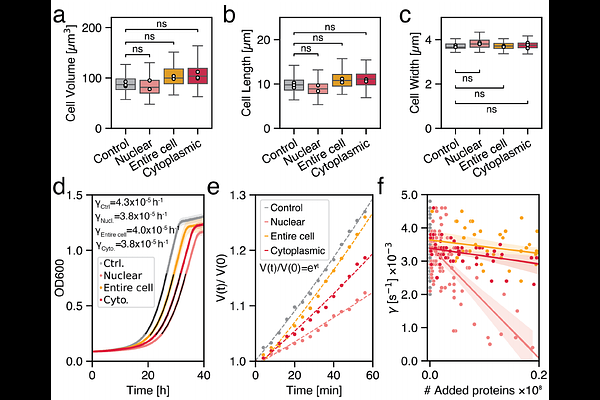
AbstractThe size of the nucleus scales with cell size, suggesting a universal scaling rule. Yet the biophysical determinants of nuclear size and the significance and consequences of altered nuclear-to-cell (N/C) ratios, which are observed across diverse pathological states and cell-fate transitions, remain poorly understood. Recent theoretical models propose that nuclear size arises from a balance of colloid osmotic pressures generated by macromolecules in the nucleoplasm and cytoplasm. Here we demonstrate that altering this osmotic balance through massive overexpression of an exogenous protein targeted to either the nucleoplasm or cytoplasm produces predictable changes in the N/C ratio in S. pombe. These quantitative perturbations show that nuclear size is set primarily by the number of proteins in the nucleus and cytoplasm, providing strong support for a pure osmotic pressure mechanism. Furthermore, cells with altered N/C ratios display tunable changes in nucleoplasmic crowding, nuclear condensate formation, nucleolar scaling and heterochromatin organization, establishing a causal link between nuclear size and gene regulatory processes. These findings reveal how cells exploit osmotic forces to set organelle dimensions, with broad implications for understanding how nuclear size shapes gene expression and cell identity in health and disease.