DLG2-DLG4 expression in lower-grade glioma is associated with improved survival and an excitatory synaptic transmission and plasticity gene signature

DLG2-DLG4 expression in lower-grade glioma is associated with improved survival and an excitatory synaptic transmission and plasticity gene signature
Gaia, F.; Dal-Pizzol, H. R.; Malafaia, O.; Roesler, R.; Isolan, G. R.
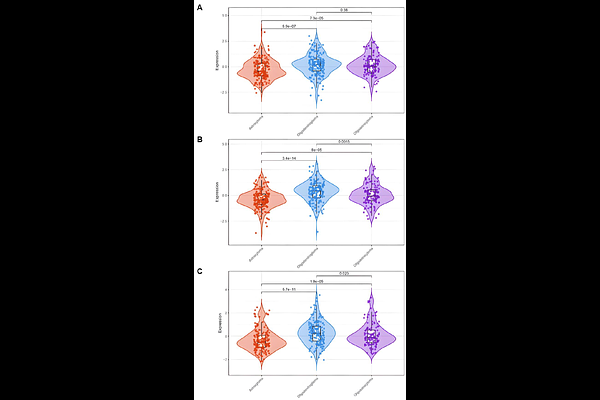
AbstractIncreasing evidence indicates that gliomas co-opt mechanisms of excitatory synaptic transmission and plasticity to support tumor progression, yet these processes remain poorly characterized in lower-grade gliomas (LGGs). Here, we investigated whether genes associated with excitatory synaptic function are linked to patient prognosis in LGG. A curated panel of 36 synaptic genes was analyzed using RNA-sequencing and clinical data from The Cancer Genome Atlas (TCGA) and Chinese Glioma Genome Atlas (CCGA) datasets. Among these, DLG2, DLG3, and DLG4, which encode the postsynaptic scaffolding proteins PSD-93, SAP-102, and PSD-95, respectively, showed the strongest associations with overall survival. Higher expression of each gene was consistently associated with longer survival acorss both datasets. Expression of DLG2-DLG4 was higher in oligodendroglioma and IDH-mutant, 1p/19q co-deleted tumors, and lower in astrocytoma and IDH-wild-type tumors. Furthermore, expression of all three genes positively correlated with a broad gene signature related to excitatory synaptic transmission and synaptic plasticity, including multiple componentes of glutamatergic signaling and postsynaptic organization. These findings suggest that elevated expression of DLG2-DLG4 is associated with a transcriptional program resembling differentiated neuronal-like features and favorable clinical ouctcome in LGG.